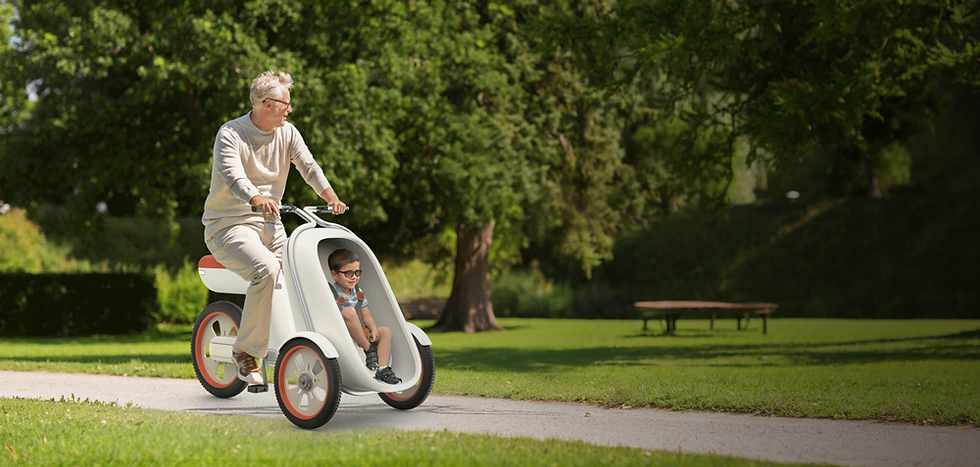
My grandfather stopped taking my younger sibling out alone.
Taking a young child out can be physically demanding.
The Challenge
Why intergenerational outings don’t happen?

Physical Limitation
-
Elderly may struggle with: stamina, strength, balance, and bending.

Riding Safety
-
Difficult to keep balance while mounting and turning.

Child's Needs
-
Young children need engagement, supervision, and secure seating — adding to the caregiver's load.
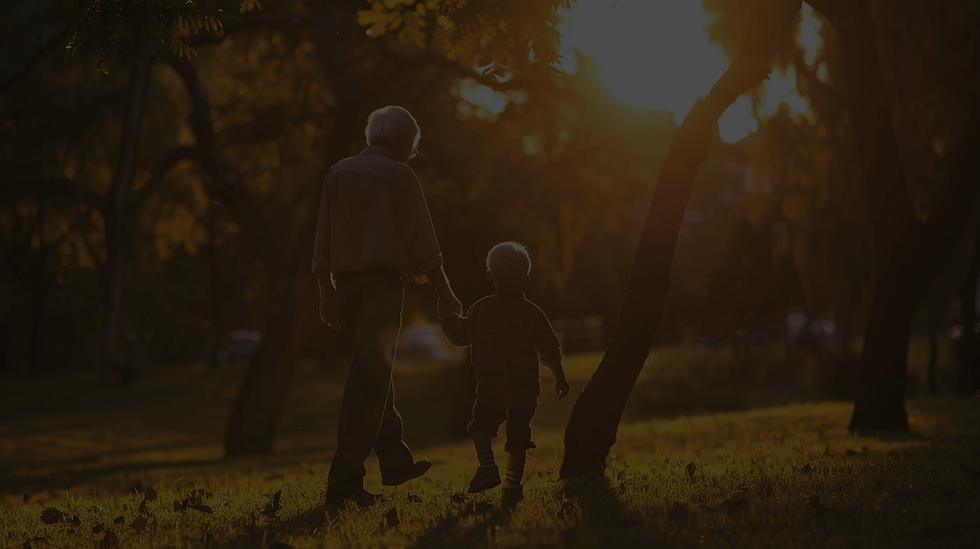
As a result, these outings happen less
- and so does the connection.
The Users
Elderly caregivers and children 3-8 yrs old who can mount independently but still require supervision.
Using Scenario
For short distance outings with single caregiver.
Benchmark
What Exists Today

Easy for Elderlies
Challenging for Elderlies
Fun for Child
Boring for Child
No current solution is both easy for elderly caregivers and engaging for young children.
How might we enable low-effort, safe, and enjoyable outings for both elderly caregivers and young children?


Range
-
Goes further than walking, suited for short neighborhood trips.
.png)
Stability
-
Three wheels allow hands-free mounting and stopping.

Adjustable Assist
-
Electric assist adapts to rider's daily physical condition.
Decision 01
Lower seat for child self-mounting
Reduces lifting and bending.

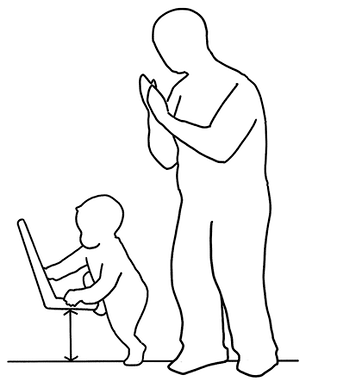
Decision 02
Low step-through frame
Mounting with ease.


Decision 03
Front-facing child seating
Open view, a more engaging ride.


Accessibility
-
Start at a snap: no lifting or balancing needed.
-
Easy mounting: low step through frame.

Comfort
-
Full view of the world for the kid.
-
Soft cushions.
-
Generous space.

Safety
-
Self-Balancing: 2 wide wheels at the front.
-
Visibility: Front & back lighting.

Safety
-
Shoulder belts.
-
Partially covered seat, blocking tires.

Intuitive
-
Simple thumb move.
-
Key info. at a glance.

Storage
-
Large under seat space.

Charging
-
High positioned charging port, avoids bending over.

Turning
-
Gentle turns.
-
Center pivot.